Towing service in the Denver metro
Long-distance towing
A car that quits in the mountains, a project car bought in Fort Collins, or a move to your own mechanic across the metro. Long tows are priced mostly by the mile, so the questions to ask are about the whole trip.
One local towing company gives its name and the total first. Your rights · Who pays us
How a long tow is priced
Expect a hook-up fee plus a rate for every loaded mile, and sometimes a charge for the truck's empty miles back. Ask whether the per-mile rate starts at the first mile or after a set distance, and whether tolls are extra. E-470 and the US 36 express lanes are toll roads.
Coming down from the mountains
Cars overheat on the climb and brakes fade on the way down. If yours quits up on I-70, the nearest truck may come from a mountain town, not Denver. A Denver company may still come up for a long tow back to your own mechanic, which can cost less than leaving the car in a mountain shop for a week. Get both prices.
In winter, check CDOT road conditions before anyone heads up. Under the Traction Law, which applies on I-70 from Morrison to Dotsero from September 1 to May 31, passenger cars need tires with at least 3/16 inch of tread rated for winter or all weather, or chains. A tow truck has to get there too.
Flatbed or not
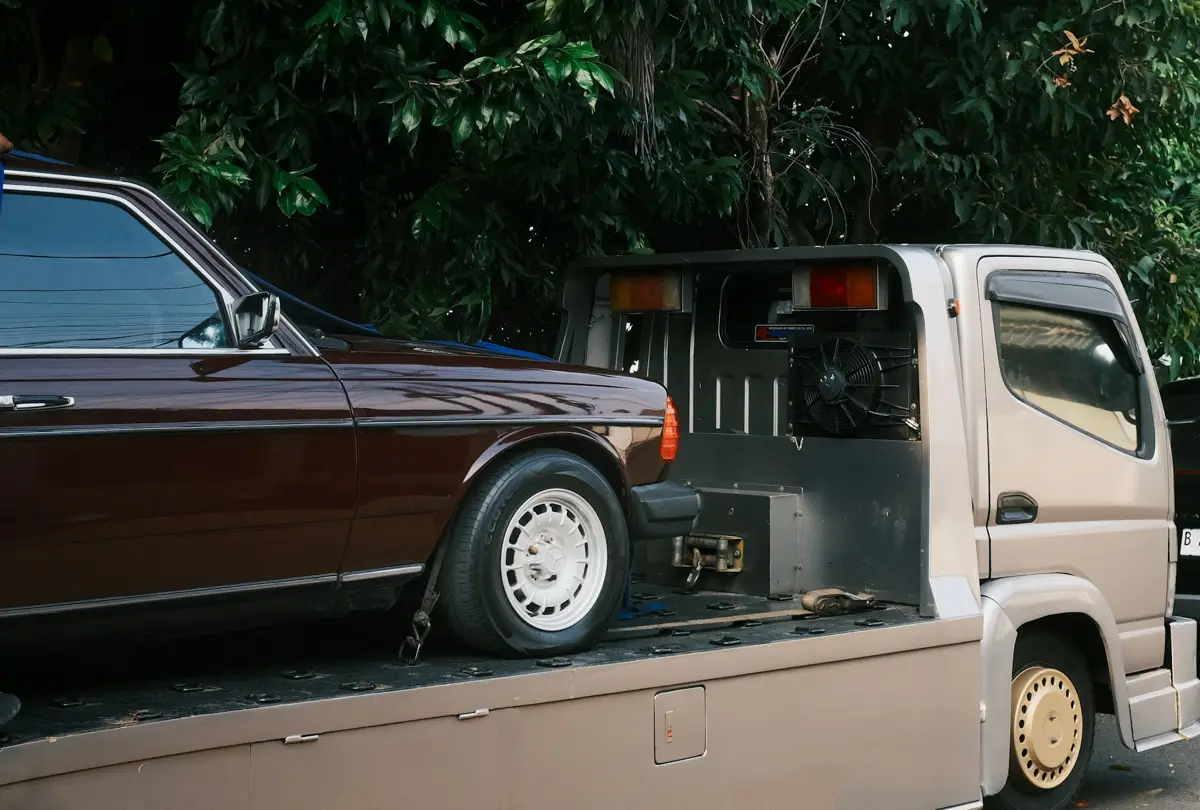
For a long trip, a flatbed spares the car's tires and drivetrain from all those miles. It is the safe choice for AWD cars and EVs at any distance. When to ask for a flatbed.
Questions Denver drivers ask
Does my insurance cover a long tow?
Many roadside plans cover only a set number of miles and charge per mile past that. Check your limit before you agree to the destination.
Sources
- Colorado Department of Transportation: Traction Law and Chain Law (checked October 28, 2026)