Guide
Breaking down in a Denver winter
Front Range winters swing from sunny and dry to a foot of snow in a day. The calls follow the weather: dead batteries on cold mornings, slide-offs when it snows, and mountain trips that end on the shoulder of I-70.
One local towing company gives its name and the total first. Your rights · Who pays us
What the weather does
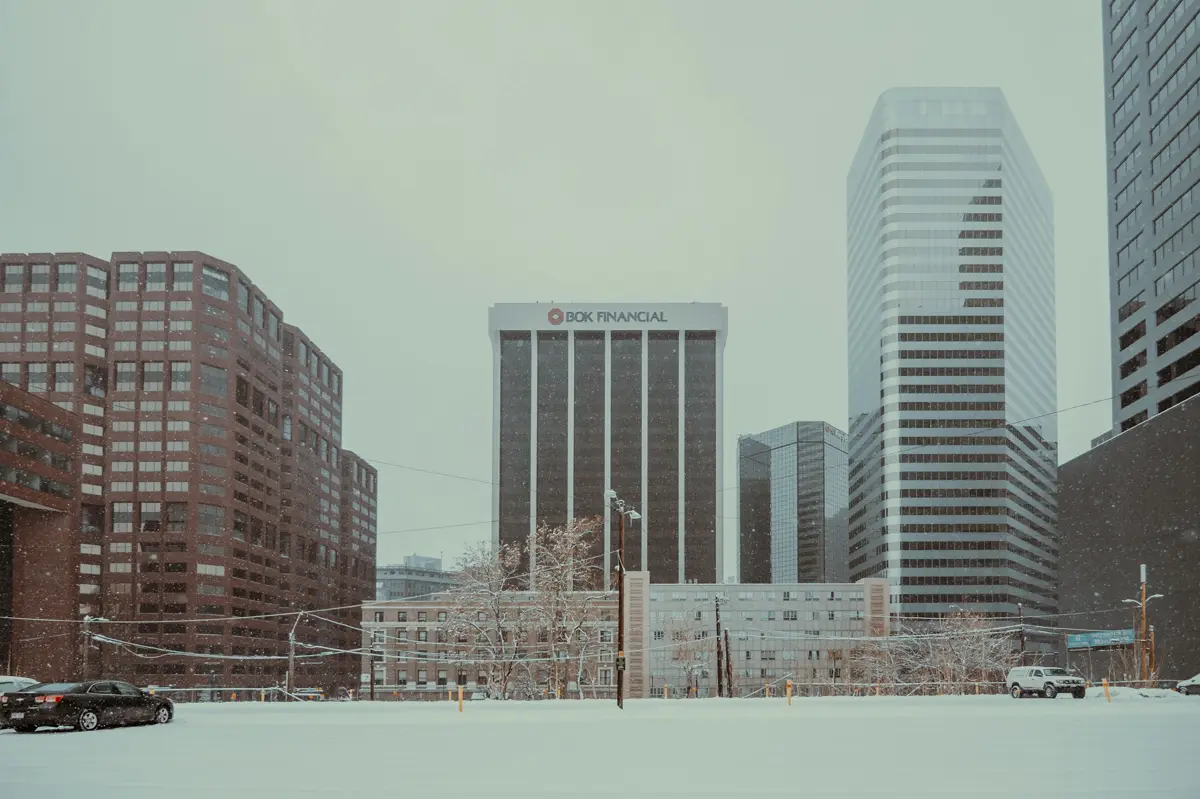
NOAA's Storm Events Database logs about 4 winter storm episodes a year across the Denver metro counties, 2016 to 2025, and about 3 hail episodes with stones an inch or bigger. January lows in the area average about 17°F. Cold is hard on old batteries, and snow puts cars in ditches.
The I-70 Traction Law
From September 1 to May 31, CDOT can put I-70 between Morrison and Dotsero under the Traction Law, and it can do the same on any state highway when conditions call for it. Passenger cars then need tires rated for winter or all weather with at least 3/16 inch of tread, or chains. Another approved traction device also counts. The fine is $100 plus a $33 surcharge. If a car without the right tires blocks a lane, it is $500 plus a $157 surcharge.
Keep these in the car
- A blanket and warm layers, since a tow can take a while on a storm day.
- A phone charger and a small flashlight.
- A scraper and a small shovel.
When you call
Give the nearest exit or mile marker and the direction you were heading. Say whether the car is in a lane or on the shoulder. If you are in a travel lane on a highway, call 911 first. Stuck in snow. Dead battery.
Questions Denver drivers ask
Do I need snow tires in Denver?
No law requires them in the city. On I-70 in the mountains, when the Traction Law is in effect, you need winter or all-weather tires with enough tread, or chains. CDOT also suggests all-wheel or four-wheel drive for mountain trips.
Sources
- NOAA NCEI Storm Events Database, Denver-Aurora-Centennial metro counties, 2016-2025 (checked October 28, 2026)
- NOAA NCEI Climate at a Glance, county temperature files (nClimDiv) (checked October 28, 2026)
- Colorado Department of Transportation: Traction Law and Chain Law (checked October 28, 2026)